
Getting the most out of digital advertising goes way beyond simply picking keywords and writing eye-catching ads. One key concept that often trips people up is how the ad auction actually works and how different bid strategies can impact your results. If you’ve ever wondered why your ads show up, or sometimes don’t, it’s usually the ad auction and your bidding approach playing a big role. I’m breaking down how these systems function and how to pick the best options for your specific goals.
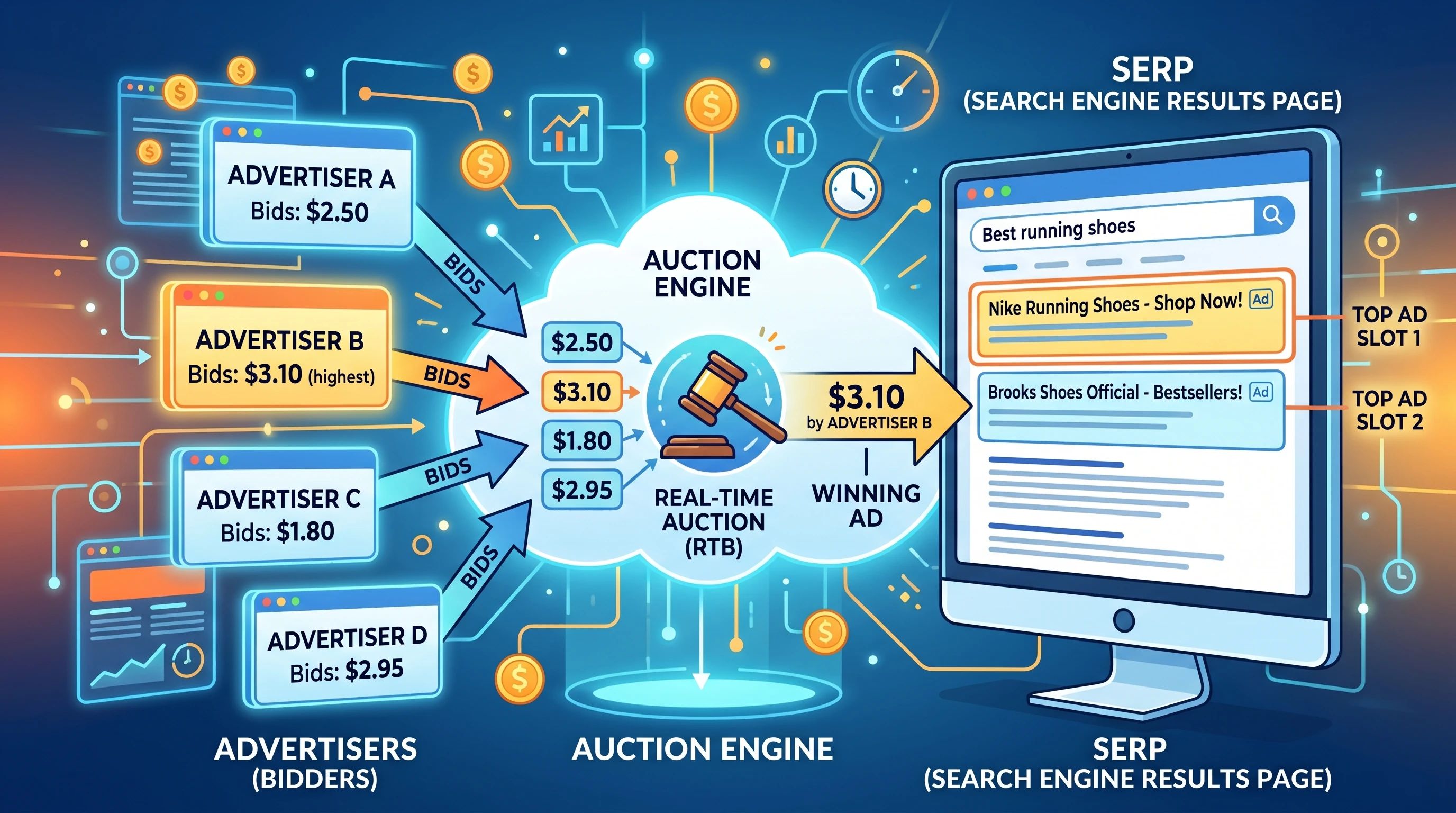
Understanding the Ad Auction System
A digital ad auction isn’t just about the highest bidder winning every time. When someone searches or visits a site, a fast-paced auction happens behind the scenes to determine which ads get displayed, in what order, and how much the advertiser actually pays. Mastering even the basics of this process helps advertisers use their budget more effectively and boost visibility.
Every day, millions of auctions happen almost instantly across platforms like Google Ads, Microsoft Ads, and social networks. These auctions consider more than just how much you’re willing to pay; they look at ad quality, how relevant your ad is to the user, and lots of other factors that affect ad rankings. You don’t have to be a super technical marketer to use the auction in your favor, but having a grip on the mechanics can give you a solid advantage.
The Key Parts Involved in an Ad Auction
To get a good handle on the auction process, it pays to get familiar with the main components that determine which ad comes out on top and how much you’re charged:
- Bid Amount: This is the maximum you’re willing to pay for a click, impression, or conversion.
- Ad Quality: Platforms rate your ad’s relevance and usefulness through metrics like Quality Score (in Google Ads). Better quality often means lower costs and higher placement.
- Expected Impact: Things like your predicted click-through rate and how engaging your landing page appears to the system count here too.
- Ad Rank: Think of this as the final score. It combines your bid, ad quality, expected impact, and sometimes extra considerations, like ad extensions, to set your position and eligibility.
The details might differ between advertising platforms, but those four elements show up almost everywhere digital ads are auctioned.
Step By Step: How an Ad Auction Works
- User Triggers Auction: When someone searches on Google or visits a site with ads, an auction is triggered.
- Advertisers Enter: Ads relevant to the user’s intent, based on keywords or targeting, join the auction.
- Ad Rank is Calculated: The ad platform looks at each advertiser’s bid, ad quality, and expected effects of their extensions.
- Ads Are Ordered and Priced: The ads with the best Ad Rank get the best positions. Typically, you’ll pay just enough to beat the next best advertiser, not your max bid.
This all happens in milliseconds. Ads feel instantly relevant to what a user just searched for. Understanding this flow can help advertisers tweak their setup for better performance.
Common Types of Bid Strategies
Picking the right bid strategy has a direct impact on your campaign results and spend. You’ll find a variety of options out there, ranging from fully manual to super automated. Each method works better for certain goals and budgets.
- Manual CPC (CostPerClick): You set your own bids for clicks. It gives you control but takes more time and hands-on adjustment.
- Automated Bidding: Platforms adjust your bids based on your set goal, using machine learning to aim for the outcome you want, like clicks or conversions.
- Maximize Clicks: The system tries to get you as many clicks as possible within your budget. This usually works well for traffic-driven campaigns.
- Target CPA (CostPerAcquisition): You set a target cost per conversion, and the system aims to get conversions around that number.
- Target ROAS (Return On Ad Spend): Set a desired revenue ratio, and the platform works to deliver that efficiency.
- Target Impression Share: Focused on visibility, you choose where and how often your ad appears, like aiming for a specific spot on the search results page.
There’s no one “best” strategy. It all depends on what you want out of your ads. If you’re new or testing things out, starting with automated options is a good way to see results fast.
A Quick Guide for Choosing a Bid Strategy
- Define Your Goal: Are you aiming for clicks, sales, or brand awareness? Matching your strategy to your number one goal makes everything smoother.
- Set Your Budget: Be realistic about how much you’re able to spend. Some bidding options stretch a budget more than others.
- Assess Your Comfort Level: Want more control, or would you rather let algorithms handle the tweaking? Manual gives you more options, while automated is less hands-on.
- Check Conversion Data: If you don’t have much conversion data yet, simple strategies like manual CPC or maximize clicks can be a good starting point.
- Monitor and Adapt: Consistently review performance. Sometimes switching strategies can get better results when circumstances change.
Trying out a few strategies and watching the data helps you identify what fits your campaigns best. For ongoing campaigns, it’s smart to regularly review which strategy lines up with your latest goals and market trends, as the digital landscape can change fast.
Challenges and Things Worth Considering in Ad Auctions
- High Competition: Certain industries, such as insurance, law, and tech, have lots of advertisers chasing the same audience. This drives up prices and makes results harder to grab.
- Fluctuating Costs: Your cost per click (CPC) or conversion can change day by day due to other bidders or seasonal demand.
- Ad Quality Fluctuations: Even great ads can slip in relevance if landing pages get stale or user habits mix it up.
- Learning Periods: Automated strategies like Target CPA often need a period to “learn.” Expect a few weeks of volatility before things even out.
High Competition
I’ve worked with campaigns where a dozen companies chase the same keywords. If you’re in a crowded field, focus on ad quality, detailed targeting, and super relevant ads. Sometimes, bidding on less popular but highly targeted keywords is more cost effective than fighting for the most obvious ones.
Fluctuating Costs
It’s completely normal for your average cost per click to move up and down. I check the numbers daily and look for ongoing trends, rather than panicking about every single spike. If your strategy isn’t delivering, make tweaks when needed. Sometimes adjusting targeting or pausing low-performing ads helps stabilize results.
Ad Quality Fluctuations
Landing page performance, updated ad copy, and even mobile compatibility all factor into your ad’s quality score. When I spot a drop, I usually rework the page or the ad copy to tighten relevance and user experience. Sometimes a small change, like a better call to action, can lift quality scores and lower your cost.
Learning Periods
Whenever I launch a new campaign with automated bidding, I give it about 2–3 weeks to gather enough data. Stopping or fiddling too soon can actually delay strong results. Trusting the learning process, at least for a little while, usually helps the algorithm find what works best. If results are still off track after this period, review your targeting and goals, and make smart adjustments.
Being aware of these issues up front helps you respond quickly and tweak your tactics for steady improvement.
Tips to Improve Your Ad Auction Performance
Fine tuning campaigns for better results goes beyond just raising your budget. Here are a few proven tips from my own work with a wide range of advertisers:
- Refresh Ad Copy Regularly: Every few weeks, update your text or images. People notice fresh ideas and platforms may reward new ads with better rankings.
- Improve Landing Pages: Make sure your landing pages load fast and match the message in your ad. A good user experience lowers bounce rates and can increase conversion rates.
- Use Ad Extensions: Add more info to your ads with extensions, like extra links, call buttons, or location info. This often increases click through and improves Ad Rank.
- Monitor Keyword Relevance: Remove keywords that aren’t performing and add more specific ones that relate to your business for higher quality traffic.
- Use Negative Keywords: Use them to prevent your ads from showing on unrelated searches, which helps save budget and improve performance.
Applying these small adjustments can have a real impact on your ad results and overall campaign value. Also, consider testing new creative approaches, like A/B testing headlines or calls to action, to spot improvements in click or conversion rates.
Examples and Use Cases in Real Advertising
- Online Retailer: Used “Maximize Conversions” bidding with strong negative keyword lists and doubled online sales in three months. Regular landing page updates kept conversion rates high.
- Local Service Provider: Switched to Target Impression Share to own top spots for branded searches, boosting in-store traffic during local promotions.
- Subscription Software Company: Tested Target ROAS for paid signups. They adjusted messaging by audience segment and saw their return on ad spend increase over time.
Trying out different strategies and tweaking as you learn is often more powerful than finding a “perfect setup” right away. Over time, you’ll track down which mix of strategies and creativity has the most impact on your goals.
Frequently Asked Questions
Question: Does the highest bid always win in ad auctions?
Answer: Not always. The ad auction looks at both your bid and your ad quality, so a well optimized ad can beat a higher bid if it’s more relevant.
Question: How often should I change my bid strategy?
Answer: There’s no set rule. I recommend sticking with one long enough to gather reliable results, then experiment with a new strategy if you have clear reasons for a change, like a new campaign goal.
Question: What’s the easiest bidding strategy for beginners?
Answer: Automated options like “Maximize Clicks” are userfriendly and usually deliver fast results, so they’re worth trying when just starting out.
Key Takeaways for Smarter Ad Auctions and Bidding
Figuring out the ad auction and picking the right bid strategy is really important for getting the most from your digital marketing budget. Paying attention to ad quality, setting clear goals, and adjusting your strategy based on data are the best ways I’ve found to steadily improve results. It’s all about continuous learning, regular tweaks, jumping into new strategies when things switch up, and staying open to testing ideas as your campaigns grow. With a little patience and experimentation, you’ll spot what works best for your business and see more consistent results from your ad spend.